
24.09.2026 – 18.10.2026
This year’s steirischer herbst festival is themed ‘Red Flags’. In psychological discourse, ‘red flags’ are used to describe problematic relationships and have long since become a meme in dating culture. At the same time, the term now serves as a warning sign for anything that represents even the slightest deviation from a prescribed ideological line. There is a tendency to welcome precautionary measures and to prefer to avoid confrontation. It is precisely this attitude that the ‘steirischer herbst’ festival has been challenging for years, if not decades.
Nevertheless, all over the world – and Styria is no exception – there are many worrying signs. Some of these may seem harmless, such as the introduction of a new festival honouring the region’s patron saint or the proposal for a ‘House of Folk Culture’. Others are no longer merely ‘red flags’, but wildfires spreading at breakneck speed: anti-discrimination programmes are being cut, migrants are being deported, freedom of expression is under threat, the antiquated patriarchal system is being courted and entrenched, contemporary culture is being starved of funding and marginalised, and even modernity itself is being called into question as a misguided path.
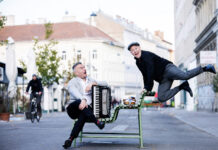
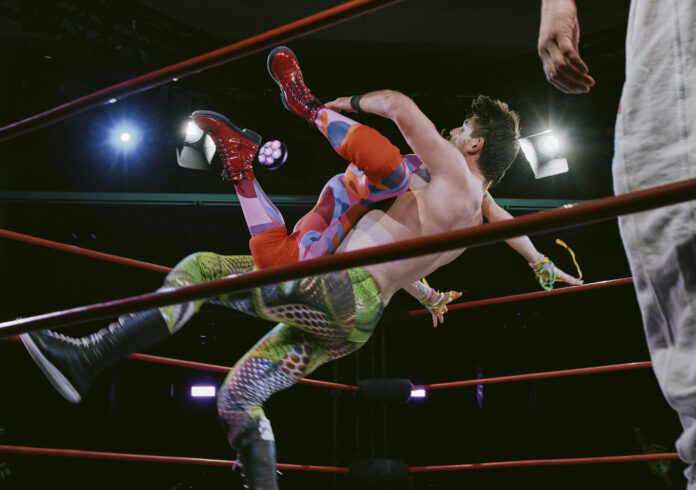
The festival opens at Karmeliterplatz in Graz with a musical performance by Julian Warner, who, in *No Surrender: Kampf um die Moderne* (2026), uses a wrestling match to highlight the many ideological struggles in our society.
On the second day of the opening weekend, the main exhibition opens with the intense dance performance *Slamming Unplugged* (2024) by Xenia Koghilaki.
For the exhibition, an intriguing derelict building – a far cry from the usual ‘white cubes’ or ‘black boxes’ – is brought to life with new commissioned works: the 17th-century house stands at a busy junction at Griesplatz 34, on the former ‘bad side’ of the River Mur, which to this day divides Graz’s central districts both geographically and socio-economically.
Following the opening, an extensive programme of performances will explore these themes: in his staging of a play by Nobel Prize winner Romain Rolland, Lennart Boyd Schürmann’s *Liluli: Allegories of the Western Soul* (2026) explores allegory as a form that allows people to play the part of gods and to view reality from a distance. In *Rhododendron* (2026), Vienna-based choreographer and musician Stina Fors creates a symbiosis between herself and the rich architecture of the Welschenkirche, a hidden Baroque gem in Graz. Francesca Grilli examines the political power of withdrawal and the precarious visibility of youth in *Record: Graz* (2026).
This year’s autumn programme is aimed at those who are on high alert because of everyday ‘red flags’, or who may perhaps have recently become one themselves – in other words, everyone. The programme ranges from a workshop with Herbstkabarett artist Krõõt Juurak (telling jokes – for children aged eight and over) to weekly open ‘dismantling’ workshops: here, participants work together to identify ‘red flags’ from their personal lives and break down the barriers they create, which divide us as a society.
steirischer herbst ’26: Red Flags
24.09.2026 – 18.10.2026
various locations Graz / Styria
www.steirischerherbst.at